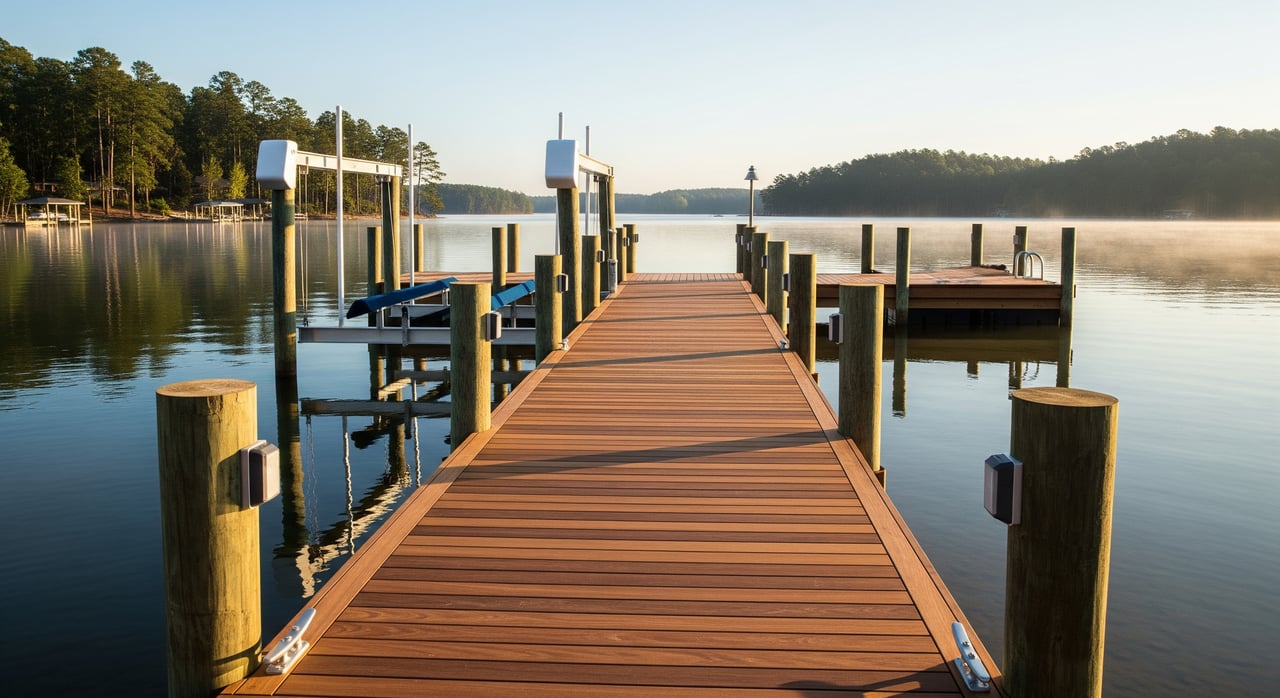
Thinking about a lake home with your own dock, but not sure how the permits work? You are not alone. Dock rules can feel confusing, especially if you live in Lakeland or Lanier County and are researching “Lake Lanier” online. In this guide, you will learn who controls dock permits on Lake Sidney Lanier, what steps and documents you need, how long approvals can take, and how to protect your purchase or sale.
Let’s dive in.
First, confirm the lake and county
Before you rely on any rule, make sure the property actually fronts Lake Sidney Lanier in north Georgia. Lakeland and Lanier County sit in south Georgia and are not adjacent to Lake Lanier. If your parcel is in Lanier County or the city of Lakeland, Lake Lanier dock rules do not apply.
- Check the deed and tax records to confirm the lake name and the county.
- If you do border Lake Lanier, your primary contacts will be the U.S. Army Corps of Engineers Lake Sidney Lanier Project Office and the county where the property lies.
Bottom line: Verify location first to avoid costly assumptions.
Who issues Lake Lanier dock permits
On Lake Lanier, more than one authority may be involved. Understanding jurisdictions helps you plan correctly and avoid delays.
- U.S. Army Corps of Engineers (USACE), Savannah District: The USACE Lake Sidney Lanier Project Office manages shoreline use on federal lands and waters. If your dock touches federal shoreline or the lake, USACE approval is typically required.
- County or city government: The county where the parcel is located handles building permits, zoning, septic, driveways, stormwater, and sometimes shorefront setbacks on private property.
- HOA or community association: Private covenants can be stricter than federal or county rules. Always review HOA rules if they apply.
What permits you may need
Lake Lanier properties commonly require a mix of federal, local, and private approvals.
USACE shoreline use permits
A USACE shoreline use or dock permit covers structures in or over the lake and on federal shoreline. This includes floating or fixed docks, boathouses, ramps, and in some cases private mooring structures. The permit defines allowable size, placement, and spacing to protect navigation and the shoreline.
Local county approvals
Counties often require permits for onshore work such as walkways, grading, retaining walls, utilities, or septic. Floodplain and erosion control reviews may apply. Some counties require engineered drawings for larger or covered structures.
HOA or community rules
Private covenants may limit dock size, number of slips, roofed boathouses, or require shared or community docks. These rules can be more restrictive than USACE or county codes.
Environmental and agency coordination
If work affects wetlands or other regulated waters, federal coordination may be needed. Tree removal, protected habitat, or stormwater rules can also trigger additional steps.
How to apply: step by step
Planning early saves time and money. Here is a high-level path many Lake Lanier homeowners follow.
Permit sequence at a glance
- Confirm property boundaries and rights. Review your deed, plat, and a current survey showing the shoreline.
- Call the USACE Lake Sidney Lanier Project Office early to verify whether a shoreline use permit is required and what standards apply to your location.
- Contact the county or city building and planning department for local permits tied to onshore work.
- Prepare a complete package: site plan or survey, dock drawings with dimensions, distances from neighboring docks, photos, proof of ownership, and contractor details.
- Submit USACE and county applications as required and pay fees.
- Respond to review comments and revise plans if needed.
- Receive permits and follow any inspection requirements during and after construction.
Documents you will likely need
- Current deed and tax parcel ID showing you have shoreline rights.
- A signed site plan or boundary survey with property lines and proposed dock location.
- Detailed dock plans with overall length, walkway, float size, number of slips, materials, anchoring method, and profile views.
- Photos of the shoreline and adjacent docks.
- Contractor license and insurance information.
- Engineered drawings if required for roofed boathouses or long fixed piers.
Timelines and fees
- Initial consultations can take days to a few weeks.
- USACE review can take a few weeks to several months depending on complexity and agency workload.
- County permits range from days to months, depending on the scope and whether floodplain or variance reviews are needed.
- Expect application and inspection fees. Budget for surveys, engineering, and potential bonds or restoration costs.
Renewals, expirations, and transfers
Permit terms vary. Some USACE permits expire or require periodic reauthorization. When a property sells, some permits can be transferred with notice and administrative steps. Others need an amendment or a new application. If a permit has lapsed or was never issued, owners may face after-the-fact permitting, required modifications, or removal. Always verify the status with USACE and the local county before you list or close.
Buyer due diligence checklist
If you are buying a Lake Lanier property, add dock permits to your inspection plan.
- If a dock exists:
- Ask for copies of the current USACE shoreline use permit and any county approvals.
- Compare permits to the as-built dock. Confirm size, location, slips, and roof match the permit.
- Confirm whether the permit can transfer to you or if you must reapply.
- Check for open violations, stop-work orders, or enforcement letters.
- Clarify who maintains the dock and how access is shared if applicable.
- If there is no dock:
- Ask USACE and the county if a dock is feasible at this site.
- Evaluate water depth at low pool, bank slope, submerged hazards, and spacing to neighboring docks.
- Review HOA covenants for limits on docks or slips.
- Protect yourself with a permit contingency that allows time to verify or secure approvals.
Seller prep and risk management
Sellers can avoid surprises by gathering documents early and addressing issues before hitting the market.
- Provide copies of any USACE and county permits, as-built drawings, and recent photos.
- Disclose known issues or past agency correspondence. Transparency builds buyer confidence.
- If a dock is unpermitted, explore remediation options. Buyers and lenders may require resolution before closing.
- Document maintenance and repairs. Organized records help buyers and appraisers understand value.
Common problems to avoid
Understanding typical pitfalls can save you time and money.
Frequent violations
- Building a dock without USACE or county approvals.
- Exceeding permitted dimensions or adding slips beyond what is allowed.
- Adding a roof or converting to a covered boathouse without authorization.
- Unapproved grading, fill, or tree removal along the shoreline.
- Encroaching on navigation channels or neighboring riparian areas.
Enforcement and remedies
- USACE can issue stop-work orders, fines, or removal requirements for structures on federal lands or waters.
- Counties can enforce building codes, levy fines, and order remediation or demolition for unpermitted onshore work.
- Solutions may include after-the-fact permitting if allowed, modifying the structure to comply, or full removal at the owner’s expense.
Practical next steps and resources
Whether you are buying or selling, a little organization goes a long way.
- Confirm the lake and county on the deed and tax records.
- Request copies of USACE shoreline use permits, county permits, and HOA covenants.
- Order a current boundary survey that shows the shoreline and any proposed dock footprint.
- Contact the USACE Lake Lanier Project Office to verify permit history, transferability, and current spacing or setback rules.
- Call the county planning and building department where the parcel is located for local requirements.
- Gather as-built photos and check for open violations.
- Build a permit contingency into your contract to protect timelines and financing.
Final thoughts
Lake Lanier dock rules are manageable when you know who to call, what to submit, and how long approvals can take. Verifying the location, the existing permit status, and the feasibility of any changes will help you negotiate with confidence and avoid surprises at closing. If your home search or sale is based in Lanier County or the city of Lakeland, remember that Lake Lanier rules do not govern those properties. Location confirmation is the first and most important step.
If you are planning a move around Lake Lanier or evaluating a property with dock potential, let’s talk about the right strategy, timing, and documentation to support your goals. For a quick pricing gut check before you list, Get an Instant Home Valuation with Unknown Company.
FAQs
What is a USACE shoreline use permit on Lake Lanier?
- It is federal authorization from the U.S. Army Corps of Engineers to construct, modify, or maintain structures such as docks or boathouses on or over Lake Lanier and adjacent federal shoreline.
Do Lanier County or Lakeland permits cover Lake Lanier docks?
- No. Lake Lanier is in north Georgia. If your property is in Lanier County or the city of Lakeland in south Georgia, Lake Lanier dock rules do not apply. Always verify the lake and county on your deed and tax records.
How long does a Lake Lanier dock permit take?
- Timelines vary. Initial consultations can be days to weeks. USACE reviews can take a few weeks to several months, and county approvals range from days to months depending on scope.
Can a Lake Lanier dock permit transfer to a new owner?
- Sometimes. Some permits transfer with notification and administrative steps. Others require an amendment or new application. Confirm the status with USACE and the local county before closing.
What if a dock on Lake Lanier was built without permits?
- Expect enforcement from USACE or the county. Remedies may include after-the-fact permitting if allowed, modifications to meet code, or removal at the owner’s expense.