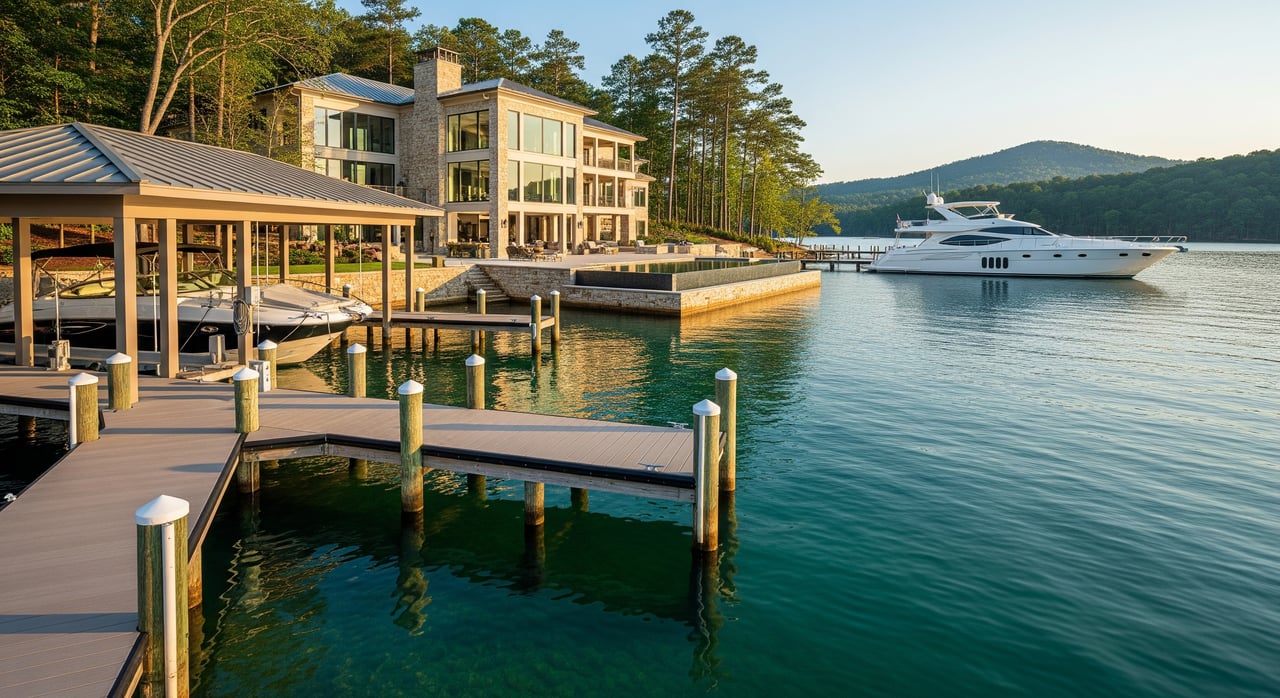
What Deep Water Lakefront Really Means on Lake Lanier
December 4, 2025
December 4, 2025
Shopping lakefront in Gainesville and seeing “deep‑water” in every listing? It sounds promising, but the term can be vague. You want confidence that your dock will work for your boat year‑round and hold its value over time. In this guide, you’ll learn what “deep‑water” really means on Lake Lanier, how water levels affect your dock, and how cove vs main channel locations compare for boating and resale. Let’s dive in.
“Deep‑water” is a marketing term, not a fixed measurement. In our local market, it usually suggests two things: there is enough depth at the dock for common boat types at typical lake levels, and you have easy access to the deeper main channel.
To make a smart decision, translate “deep‑water” into measurable facts. Ask for the water depth at the dock, the distance to the main channel, and the lake elevation at the time of measurement. These details give you a true picture of your boating options.
Lake Lanier is a managed reservoir that supports flood control, water supply, hydropower, and recreation. Because it serves multiple purposes, the lake level changes with weather and operations.
Typical seasonal patterns matter. Levels often rise with spring and early summer rains. Hot, dry periods or multi‑year droughts can push levels lower. Occasionally, drawdowns occur for maintenance or emergency needs. A dock that feels “deep” in a wet summer may be shallow during a dry cycle, so you need to plan for the full range.
The U.S. Army Corps of Engineers is the official source for Lake Lanier elevations, daily updates, and shoreline rules. When you verify depth, always note the date and the posted lake elevation.
Location on the lake impacts depth, boating, privacy, and value. Both cove and main channel lots can be excellent, but they serve different priorities.
If you value quiet swimming and paddle time, a sheltered cove might be perfect. If you run a larger boat or want quick access to open water, main channel can be a better fit. Resale follows buyer demand: boaters often pay for convenience, while privacy‑minded buyers seek calmer water.
Different boats require different depths to operate safely. Use these typical planning ranges and confirm for your specific vessel.
If a listing claims “deep‑water,” confirm that the stated depth meets your boat’s draft at the lowest expected lake level you plan to use.
Replace vague terms with facts. Ask the agent or seller to provide statements like:
As a guideline, many buyers look for:
Always tie the depth to the lake elevation on that date. Without this context, depth numbers are not comparable across properties.
Shoreline structures on Lake Lanier typically need authorization from the U.S. Army Corps of Engineers. Hall County or the City of Gainesville may require building or shoreline permits. Your community HOA may also have rules for dock size, lifts, or boat types. Deeds rarely guarantee a specific water depth, so rely on measurements and permits on file.
Clear, dated measurements build trust and reduce objections. Consider including:
If you still use the term “deep‑water,” follow it with the data. Buyers will appreciate the transparency and your property will stand out against vague listings.
Main channel frontage often attracts boaters who value quick access and deeper water, which can support pricing power in that buyer segment. Cove lots can be equally desirable for privacy and calmer water. Value depends on your likely buyer pool. The safest route is to present accurate depth data, documented permits, and a dock that matches the expectations of your target audience.
Buying or selling lakefront in Hall County is about more than views. You need a local advisor who understands depth, docks, permits, and how seasonal levels affect real use and resale. With 25+ years in the home industry and a specialty in Lake Lanier properties, Michelle brings hands‑on expertise to verify depth, coordinate marine surveys, and present your property with luxury‑level marketing.
Here is how Michelle helps you move with confidence:
Whether you are chasing weekends on the water or selling a legacy property, you deserve precise guidance and white‑glove service from start to finish.
Ready to talk depth, docks, and value on Lake Lanier? Connect with Michelle Sparks for a no‑pressure consultation.



With extensive knowledge of the Lake Lanier real estate market, Michelle helps her clients find their dream lakefront home or successfully sell their property for top dollar.

MICHELLE SPARKS
434 Green St Gainesville GA 30501