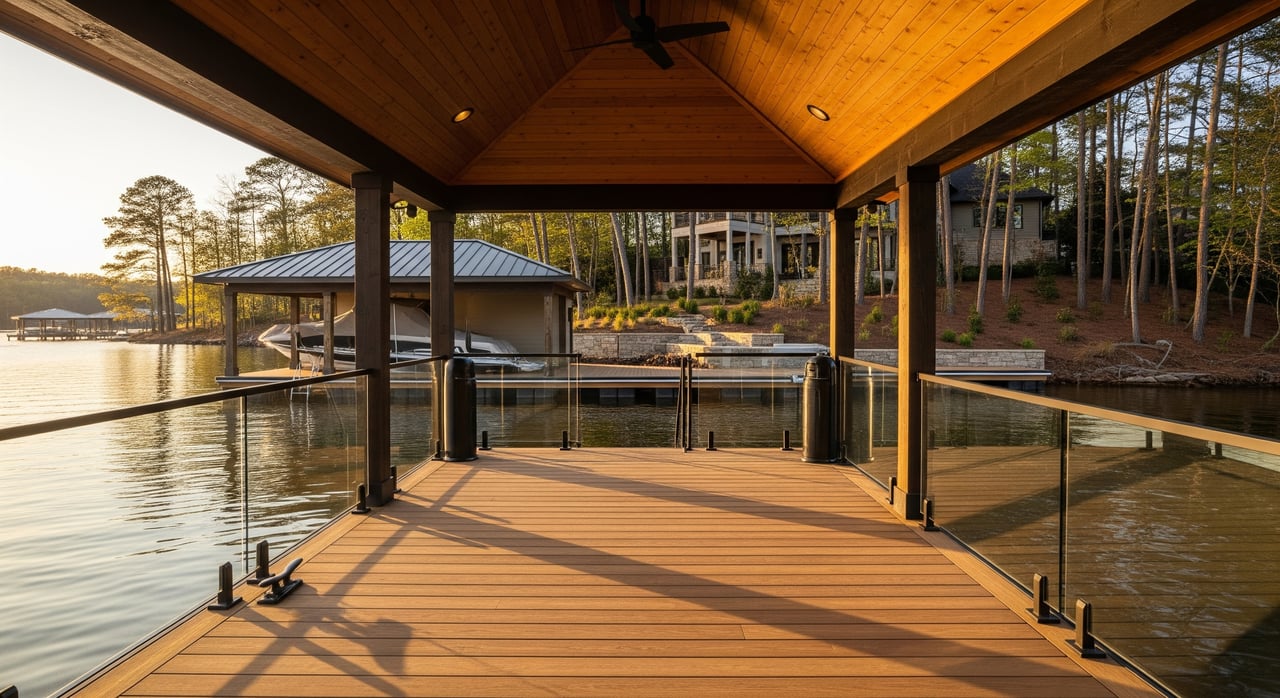
How the Lake Lanier Dock Permit Cap Affects Prices
October 16, 2025
October 16, 2025
One number can move Lake Lanier prices in a big way: the total count of private dock permits. If you are buying or selling on the lake, dock access is often the amenity that makes a home stand out. You want clarity on whether a dock is permitted, what that permit really means, and how the cap affects value. In this guide, you will learn how the permit cap works, how it influences pricing, and what to verify before you write or accept an offer. Let’s dive in.
The U.S. Army Corps of Engineers (USACE) manages shoreline use at Lake Sidney Lanier under the Shoreline Management Plan. That plan sets a maximum carrying capacity of 10,615 private dock permits. When that ceiling is reached, new private permits are not issued except under strict conditions. You can review the program details on the USACE’s Shoreline Management page and the supporting EIS documents.
Permits are government authorizations with five-year terms, administered by the Corps. They are not privately transferable property. The USACE owns the permits and handles re-issuance to a new owner through its process. See the USACE permit program overview for mechanics and compliance.
A fixed supply of private docks creates scarcity. Properties with a compliant, permitted dock often command a premium because they deliver private boat access and a unique lifestyle benefit. Academic research backs this up. One peer‑reviewed hedonic study of lakefront homes found a large premium for properties with docks, though every market is different. You can explore that research context in this study of waterfront valuation.
What matters most for your home is local evidence. Compare nearby sales that clearly state “permitted private dock” versus “no dock” to estimate the premium in your neighborhood.
Here is how dock permissions typically show up in a transaction on Lanier:
Use this quick checklist to avoid surprises:
USACE may pause acceptance of new shoreline use permits during low water. The Corps’ Low Water Action Plan has historically triggered moratoriums around 1,063 to 1,064 feet above mean sea level, with recovery criteria before reopening. That policy has been used in past droughts. See a Corps release on drought impacts and application pauses.
For buyers, the takeaway is simple. If your plan depends on a new or modified permit, conditions and timing can affect feasibility. Build flexibility into your contract timelines.
When a private permit is not possible, many owners use alternatives that still deliver the lake lifestyle:
These options can broaden your search and help you balance price, convenience, and maintenance.
Unauthorized structures on Corps property are prohibited under federal regulations. Violations can lead to removal orders and penalties. Review the Corps’ enforcement authority in 36 C.F.R. part 327.
Abandoned or unsafe docks are a separate issue that affects safety and value. USACE has publicized cleanup and compliance efforts related to abandoned docks on Lanier. If you see a dock but the seller cannot produce paperwork, treat it as a major warning sign and verify status directly with USACE before pricing it into a deal.
If you want a straight answer on a specific property’s dock status, value impact, and the cleanest path to closing, let’s talk. Connect with Michelle Sparks to get local guidance tailored to your goals on Lake Lanier.

With extensive knowledge of the Lake Lanier real estate market, Michelle helps her clients find their dream lakefront home or successfully sell their property for top dollar.

MICHELLE SPARKS
434 Green St Gainesville GA 30501